
🍂 : endings
(#5) confronting what happens when it's over
🥀 grappling with grief and goodbyes
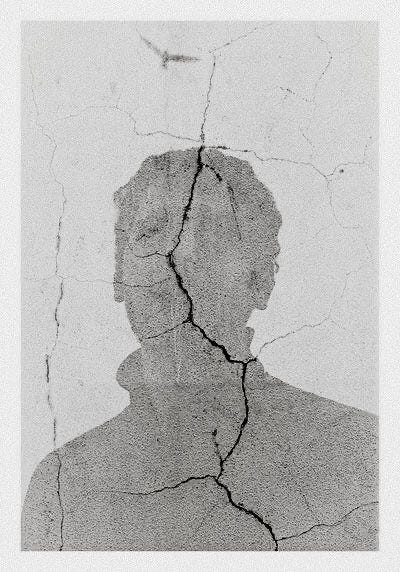
When Fitzy died 5 months ago, I was so unprepared for what entailed. Not the literal death or even the lead up to it as he stopped eating and never got better, but what happened after. The aftermath of losing him cracked me open.
I tried to think my way out of it as I always do, relying on rationality — my cerebral safety blanket. Logically, I understood that I was going to outlive him. But he was also my first dog and the first attachment in my life, which taught me so much about unconditional and uncomplicated love. Nothing about losing him and what that meant could be encapsulated intellectually for me to accept.
I tried to write about him, as I went through my days after, noticing how he was quietly present in the most mundane yet intimate parts of my life. But those words will have to lie in wait as another draft in this Substack. That will come soon.
I wanted to write about this first.
This has been the heavy malaise I’ve been carrying around my whole life — not the (anticipatory) loss or grief itself, but the niggling knowledge that there was a bubbling dread that was going to feel so much worse when it finally happened to me. I knew it in my bones, but I couldn’t articulate what it was.
My life has been a charmed one, but this has come at a cost that has left me ill-equipped to deal with what will inevitably come for us all. I won’t downplay how lucky I am to get to the age I am to only learn about this now, but it has also meant that there were many dark and hard parts of life I just had no concept of understanding. All I know is that life brought dubious losses, which morphed into ones that felt unacceptable.
I inadvertently trained myself to become information-obsessive1 as a way to prepare and intellectually touch these dark and scary bits without embodying them. But let’s be honest, as much as we’d like it to be, an imagined reality does not give a modicum of awareness to an experience. It often felt like an absurd daydream, sparked by the sensationalised tragedies of others, portrayed (through social media and its ills) with impassioned soliloquies of bad mental health days. I was convinced that I wouldn’t be able to deal with it when it did, and that further kneecapped me.
Growing up, I massively distrusted what the adults were telling me. I was a broody and introspective kid, and my curiosity always skewed existential, so my questions were not light. The attempted answers to these would come wrapped in allegory, punctuated with hubris, like ‘it would never happen to us’ if we all just ‘did the right things’. Vague, amirite? Was I meant to just accept these reasons wholesale? I had follow-up questions, naturally.
But the generations before me kept the sticky and messy parts of life at arm’s length — not just from me, but from themselves too. They were so adept at avoiding — a disposition I have also inherited — so the answers never went beyond shallow responses. Love and trauma in all their shapes and forms were couched under the umbrella covering all of life’s grey areas, and to be adamantly swerved past from a mile away. Ultimately, I perceived that they were terrified of the depths of these fates, whether they were true or not.
While it was obvious that they weren’t telling me the whole picture, it was even clearer that they moved through life with a steadfast dedication to their own narrative scaffolding when confronted with uncertainty. It looked like fear or a lack of courage, but I’ve since discovered that it’s actually a willful rejection of any grounded acknowledgement of an objective reality.
Yiyun Li describes it better than I ever could in this conversation with Manjula Martin in Orion Magazine following the release of Li’s memoir about the language of loss, and the loss of her second son:
Oddly I don’t think I’m a pessimistic person. I think tackling dark things, leaving no illusion—that’s the only hope we have. If we really want to go on living in this world, we cannot start with self-deception. Once you start self-deception you start to deceive others. And so, I think that’s what I’m arguing against with that title. Nature is just nature.
I can understand feeling afraid and not having the capacity to harness the intrepidity to do what is right at the hardest of times. It is human, after all; we are not born fearless. But what I witnessed instead was the absolute surrender to a superstitious belief that was both dissociative to participating in your own life (internal) and a disconnection from building honest relationships with others (external).
❤️🩹 love is loss is love
To willingly move through this human existence is to carry on with the prickling discomfort that everything has to end one day. I didn’t see how I was depriving myself of all the lives I could live, and all the people I could be by holding on so tightly to what I thought was a finished product. I believed that this was it, so I gripped even tighter.
My parents still live in the same house I grew up in, and are still married to each other and alive. I moved away as a teenager but moved back in as a young adult (moving out after I came back took a while to do, even). I’m still friends with the first friends I made in school, though we may not have much in common anymore other than our shared memories. All of my best friends (except one who is as good as my chosen family) are friendships I made in childhood or since birth. I had one big long relationship and we attempted to go our separate ways and start other relationships, but we got back together and I married him.
I just didn’t want to let go, and I didn’t want change. I wanted to grow, but I wanted to grow without changing.2 At a softer and safer time, I regarded this as sentimentality — that I appreciated the length and history of these relationships; that I was loyal, steadfast, unmoving; that I was reliable and exactly as you remember me: unchaotic, predictable, safe.
But this is a more accurate representation of what eventually became of me. Holding it all in, until I had nowhere to go but confront the depths of my rage. To acknowledge that all those years of silent sadness and passivity was actually a covering of deep simmering fury.
And it was all coming out now.
‘Rage is only for what you believe can be fixed. All the rest is grief.’
- Cormac McCarthy, Stella Maris
I discovered how far down the abyss of my despair could go within a 2-week period in July, almost exactly 2 months after Fitzy died. We lost my maternal grandfather, 2 of Shern’s uncles, and a close friend of ours within that time frame. Even though it was a lot at once, it was our friend Khairul’s unexpected passing that hurt the most; none of us wanted to let him go, and none of us got to say goodbye to him.
Khairul’s death had no logic to it. We were not meant to outlive him; he was building his life with so much promise and tenderness.
None of the pre-emptive measures I diligently set in place to protect myself from the pain of loss was even remotely applicable. As a matter of fact, the costs were even more than I had expected. Along with the heavy sadness that life is going to go on without him, processing this was addled with so much regret and anger.
I both hate and appreciate that this truth bomb is what I’ve wrestled out of these rough days: a big part of loving someone is to eventually bid them goodbye.
Sometimes, we can live with the soft blanket of belief that we did everything we could to be with them until time ran out, even in the face of flawed human reactions or unexplained worldly causations.
Often, it’s coming to terms with time that’s been cut short too soon, with words left unsaid or misunderstood. Always, it feels awful to be apart from them, now that they have gone somewhere we can’t get to. Yet, or maybe never.
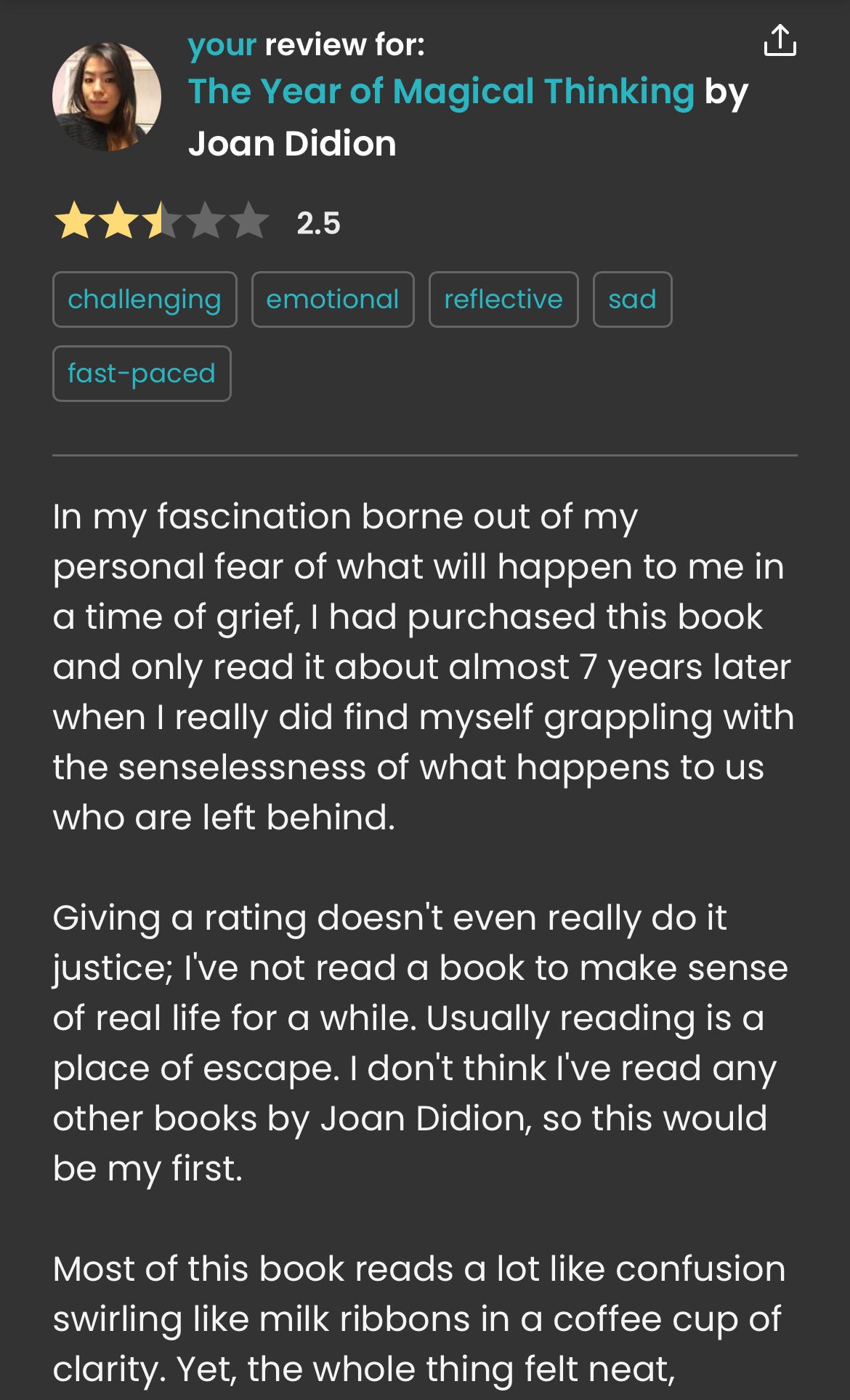
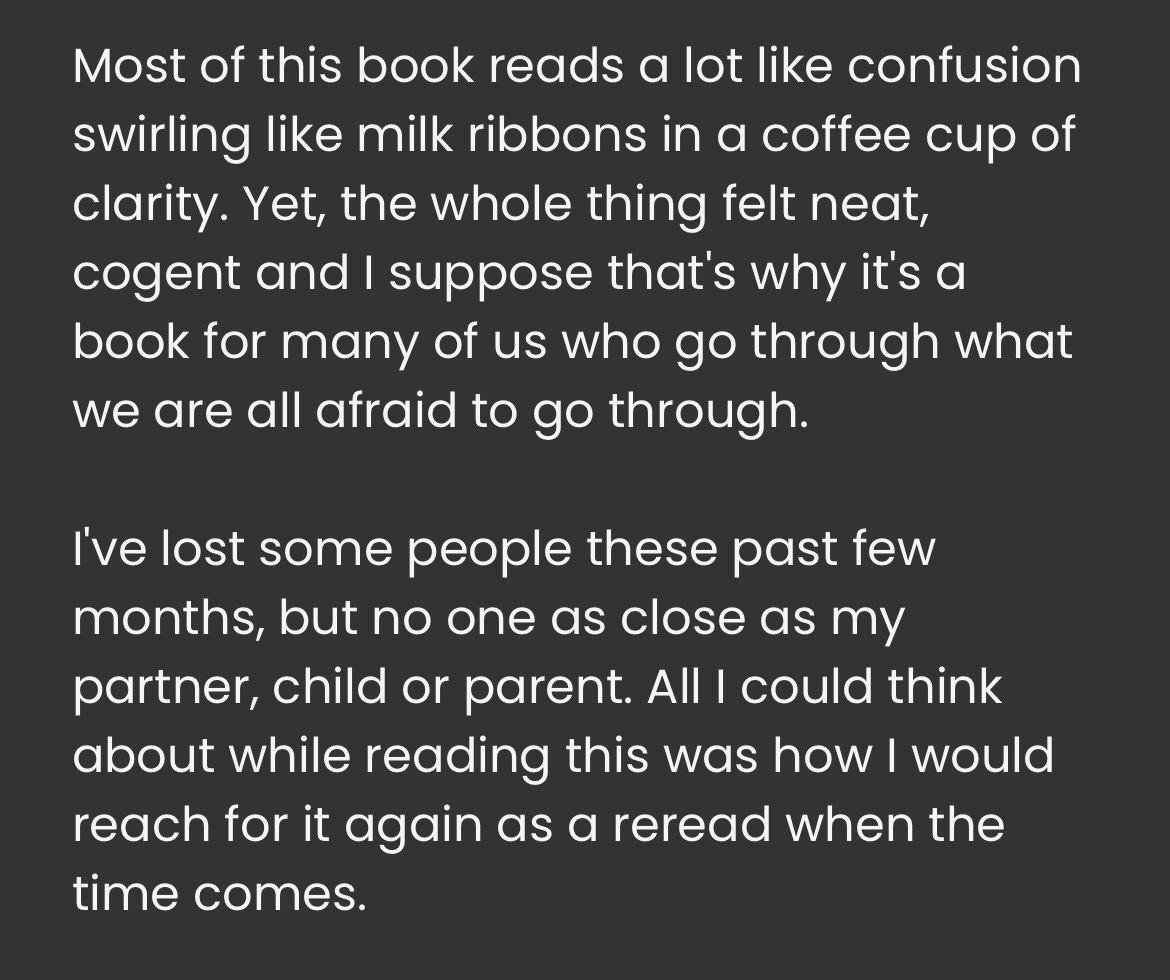
I bought ‘The Year of Magical Thinking’ by Joan Didion almost 8 years ago, but it sat languishing in my TBR pile. Magical thinking of how I was going to prepare myself for grief, but I couldn’t even get myself through the first few chapters. I only got around to reading it this year. I thought words were going to help me through it. It did not.
In hindsight, I’m completely aware of how absurd and naive this is.